
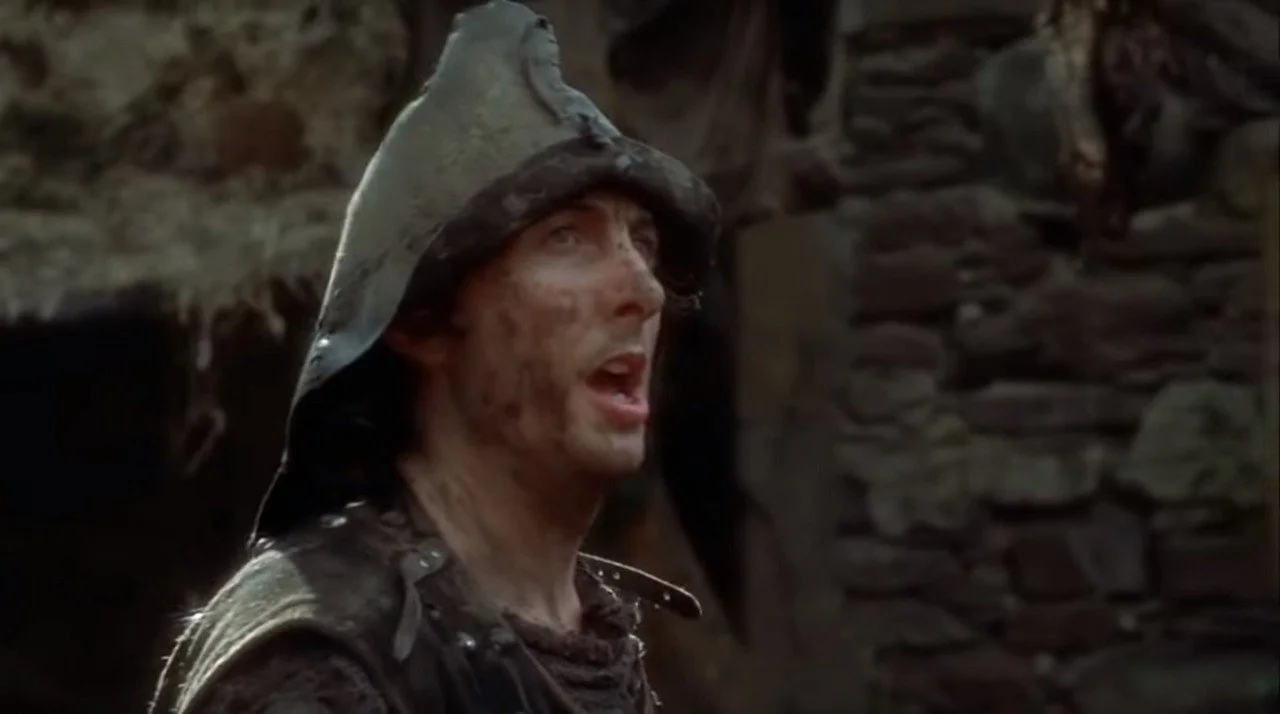
Bring Out Yer Dead!
Today is New Year’s Eve. It is the end of a thing, and tomorrow begins a new thing.
When I was a child, I would try to take New Year’s Day seriously. When I awoke, I would take care to choose my first words wisely. Not that I had much wisdom, mind you, but it seemed wise to choose wisely. Whatever I said first would be the only thing I could say first for that year. I couldn’t take it back or change it. I loved my mom, so I would routinely start my first sentence addressed to her so that the first word of the first sentence of the new year would be “mom.” That seemed like a good way to begin a new year.
It is common in our culture to take New Year’s Day seriously. Frequently, people recognize the start to a new calendar year by making new year’s resolutions, and usually, the resolution is to stop a negative habit and start a positive one. Stop eating so much junk food and start eating better. Stop sitting around so much and start an exercise program. Stop spending money on unnecessary things and start saving or investing money. Stop drinking so much and get sober. Stop scrolling so much and start using your time more wisely.
It is also common in our culture for new year’s resolutions to last for about a month before falling back into the old habits and routines. But that does not mean we should stop taking the new year seriously or stop making resolutions. We should want bad habits to stop and good habits to be formed. We should want our old, worldly man to die and to become new and better men and women.
An important and regularly recurring theme in God’s Word is death and resurrection. We see the death and resurrection of individual people such as Elisha raising the Shunammite woman’s son (2 Kings 4), Jesus raising Jairus’ daughter (Luke 8) and Lazarus (John 11), Peter raising Tabitha (Acts 9), and others. Even though God did not eventually require Abraham to sacrifice Isaac, we read that Abraham was willing to do it, not just because God told him to, but also because he trusted that God would raise the boy from the dead (Genesis 22:5, Hebrews 11:19).
And of course, most importantly, Jesus laid down his life and took it up again (John 10:18). He died and rose from the dead (Luke 24:46). He laid down his life, for no man or devil could take it from him, and he took it up, never to die again (Romans 6:9, Hebrews 9:28).
The Scriptures also echo this theme of death and resurrection in daily life. Jesus says, “if any man would come after me, let him deny himself, take up his cross, and follow me.” (Luke 16:24). The cross was a tool of death. Like our noose, firing squad, or electric chair, the cross was a symbol of death because it was a means of death. Jesus was telling his disciples that they had to die to follow him. Not that their physical lives must immediately come to an end, but that every day of their lives, they would need to deny themselves the fleeting pleasures of sin as they followed after Jesus Christ.
The apostle Paul said “I die daily!” (1 Corinthians 15:31) What did he mean? Did his physical body die every day? All cellular function ceased? No breath in his nostrils or beat of his heart? No. Paul explains this daily death in his letter to the Romans where he says, “you must consider yourselves dead to sin and alive to God in Christ Jesus. Let not sin therefore reign in your mortal body, to obey its passions. Do not present your members to sin as instruments for unrighteousness, but present yourselves to God as those who have been brought from death to life…” (Romans 6:11-13).
As the year of our Lord 2025 has nearly run its course, it is about to die. The new year of 2026 is about to be born. If you watch TV tonight, you probably see 2025 represented as an old man with a long, white beard, perhaps even feebly walking on a cane, and you’ll see 2026 represented as a baby, fresh and new and full of life. When you think of the old, 2025 man passing away and the new, 2026 man getting his start, remember that the old you of 2025 does not have to continue the same old, selfish, self-destructive, God-dishonoring habits into the new year. The old you can die, as Christ did on the cross, and a new you can be raised to newness of life, even as Christ rose from the dead.
Don’t give up on new year resolutions. Consider making some changes, and as you do remember that the old man is dead without Christ. You cannot raise yourself from the dead as Jesus did. If you try to raise yourself from the dead in 2026, you will fail, but in Jesus: looking to him, seeking him, trusting his promises, worshipping with his church, receiving his washing, and feasting on his body and blood, you can die to the old you and be raised a new creature in the new year.
